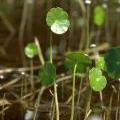
Atlantic Coastal Plain Flora
Atlantic Coastal Plain Flora (ACPF) are a unique group of unrelated plants that are mainly restricted to the flat land along the Atlantic Coast from Florida to Nova Scotia (NS) called the "Atlantic coastal plain". ACPF add much to the biodiversity of southwest Nova Scotia, they provide function and beauty to our lake shores and wetlands, and they need help from stewards to ensure that they persist for future generations.
Here's what you need to know about this unique and special group of plants:
- There are 95 ACPF species in NS. Learn more about them by checking out this ACPF Identification and Information Guide!
- More than one-third of these plants occur no where else in Canada! Southwest Nova Scotia is a very special place.
- They are found throughout the province but the rare species are concentrated in the province's southwestern region.
- They grow in wet places such as lake and river shores, bogs, fens, and estuaries. Check out these habitats!
- Twelve of these plants are listed as "species at risk" which means that without conservation and recovery efforts, they are at risk of going extinct. They are protected under federal and provincial legislation.
- Almost half of these species are listed as 'at risk' or 'sensitive' by the provincial government and need help to make sure they are not lost.
- Nova Scotia contains some of the best remaining habitat for these species in the world.
- You can help recover these species and ensure they remain in NS for generations to come!
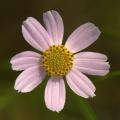
For more photos, check out our photo gallery.
The Natural History of Atlantic Coastal Plain Flora
The Atlantic Coastal Plain started forming about 100 million years ago when the Mid-Atlantic Ridge began expanding the Atlantic Ocean. For millions of years, the Appalachian Mountains eroded and many rivers and streams deposited sediments along much of the eastern coast of North America. In some places, these sediments are over 10 km thick! This formed a flat landscape that lies between the Piedmont (just below the mountains) and the ocean, from New Jersey to Florida. Given millions of years and the fairly consistent availability of flat, often wet habitats, many hundreds of species of plants have adapted to and thrive along this coastal plain.

The last 2.5 million years have been characterized by a series of glacial periods, the last of which peaked about 22,000 years ago when all of current Nova Scotia was covered by very thick ice. This glacial period ended about 12,500 years ago and a few thousand years later, Nova Scotia was free of ice. With sea-levels as much as 100 m lower than today's, and with a relatively warm climate, many coastal plain species migrated north either across a smaller (<150 km) gap between Cape Cod and southern Nova Scotia, or to New Brunswick and back south. Even though southwest Nova Scotia is not technically part of the Atlantic Coastal Plain, its climate, geology, and glacial history support some of the best coastal plain-like habitat in all of North America.
This group of plants is well-adapted to living in areas where many other plants cannot survive and are regularly subject to disturbance by wind, waves, ice, and changing water levels. They do not compete well with other more aggressive plants and therefore can not establish in undisturbed, fertile areas. ACPF are often found on exposed, gently sloping, sandy or gravel lake shores in addition to a number of other habitats.
What Threatens Atlantic Coastal Plain Flora?
To ensure that this special group of plants remains in NS there are a few simple actions we can all take to help out. ACPF are threatened by habitat modification from activities such as shoreline development (cottage building, docks, walls, etc) road building, infilling, and nutrient run-off.
Because these species occur in low nutrient environments where competition from other species is low, they can become displaced if water nutrient levels increase and allow more common and competitive species to move in.
Many people already know or have learned about these species and are taking actions to help them. If you live or work near this special group of plants, become a steward and help these species. It's as easy as keeping your shore lines and wetlands wild!
Visit the You Can Help page for more information.